

THE REPHAIM
ARCHIVE ENTRY // REPHAIM
CLASSIFICATION: Postdiluvian / Nephilim Descendant
ORIGIN: Inherited Nephilim Bloodline
STATUS: Dispersed
KNOWN LINEAGES: Anakim / Emim / Zamzummim
THREAT DESIGNATION: Restricted
The blood remained
THE TRIBES
The blood did not remain hidden forever.
As mankind spread across the post-Flood world, certain bloodlines began producing descendants who carried unmistakable echoes of what had come before.
They were taller than ordinary men. Stronger. Formidable enough that entire peoples became known for the giants who lived among them.
But they were not the Nephilim of the old world.
The blood of the Watchers had been diluted through generations of human inheritance. Their stature had diminished. Their lives had shortened. What remained were lesser reflections of the great kings who had once ruled before the Flood.
They became known by many names.
The Emim. The Zamzummim. The Anakim.
And among the oldest names associated with them:
The Rephaim.
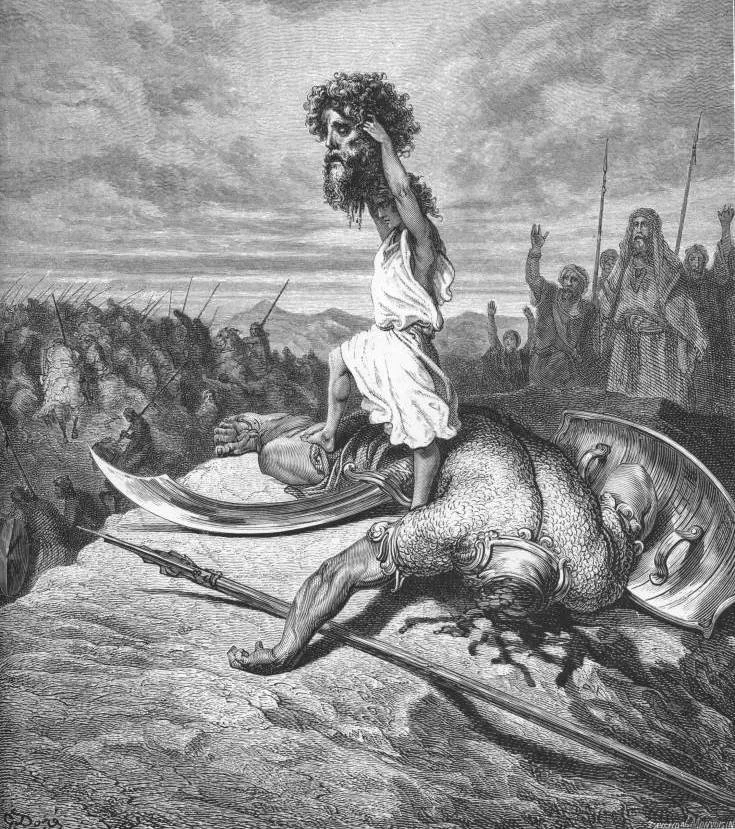
Their clans established territories and strongholds throughout the ancient world. Kings such as Og of Bashan ruled over fortified cities, while generations later warriors descended from the giant clans still appeared upon the battlefield.
The most famous was a champion from Gath.
Goliath.
They were remnants of another age living openly in a world that was rapidly leaving that age behind.
And unlike their ancestors, they would not remain beyond the reach of mankind forever.
The age of the giant kings was coming to an end.
THE SCATTERING
The death of Goliath was not the end.
It was a warning.
The surviving Rephaim understood what their ancestors had failed to learn. The lands they once ruled openly were no longer theirs, and the peoples they considered beneath them had learned that giants could bleed.
So they left.
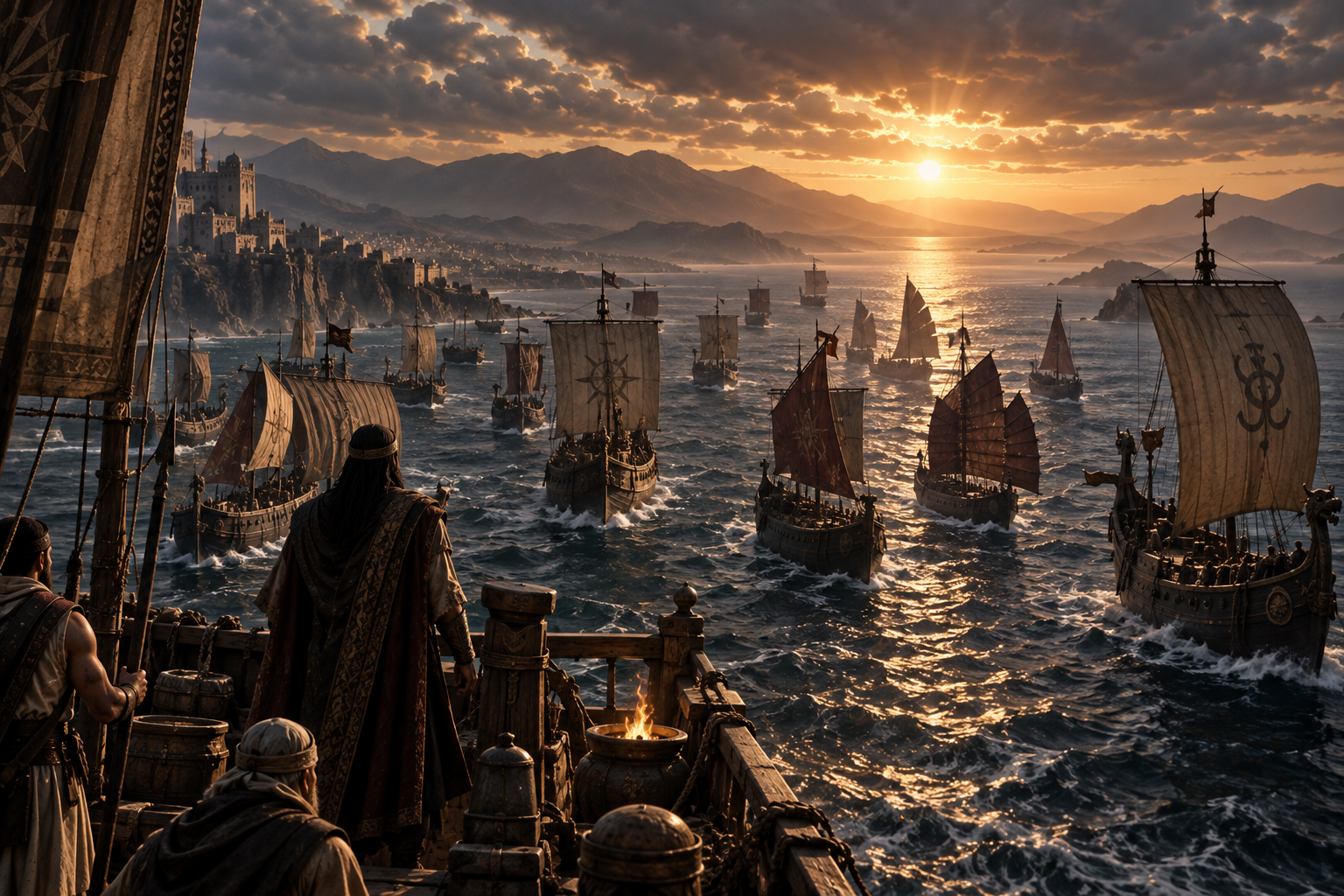
Families scattered westward from the ancient Near East, crossing into Europe and eventually beyond it, searching for distant lands where the memory of the Nephilim had faded and their blood could once again command reverence.
They no longer arrived merely as conquerors.
They arrived as children of forgotten gods.
Wherever the surviving bloodlines settled, echoes of the old world seemed to follow. Civilizations separated by enormous distances raised monuments toward the heavens. Priests charted the movements of the stars. Great structures were aligned with celestial events, while stories emerged of powerful beings who had arrived from distant lands—or descended from the heavens—bearing knowledge from an earlier age.
Across the Americas, those echoes appeared again. Among the monumental cultures of North America, the Maya, and eventually the Inca, traditions emerged that bore unsettling similarities to fragments of the world that had existed before the Flood.
Perhaps the Rephaim built none of it themselves.
Perhaps they didn't need to.
They had learned that knowledge could purchase loyalty more effectively than conquest, and that men would willingly build monuments to those they believed had given them the secrets of the gods.
The names changed.
The architecture changed.
The rituals changed.
But something ancient had crossed the ocean with them.
THE LONG ASCENT
They stopped building kingdoms.
They began building families.
As the last remnants of the old tribes disappeared into the populations around them, the surviving Rephaim abandoned the symbols that had once betrayed their presence. There would be no more giant kings, fortified cities or armies marching beneath their banners.
Their blood became their greatest weapon.
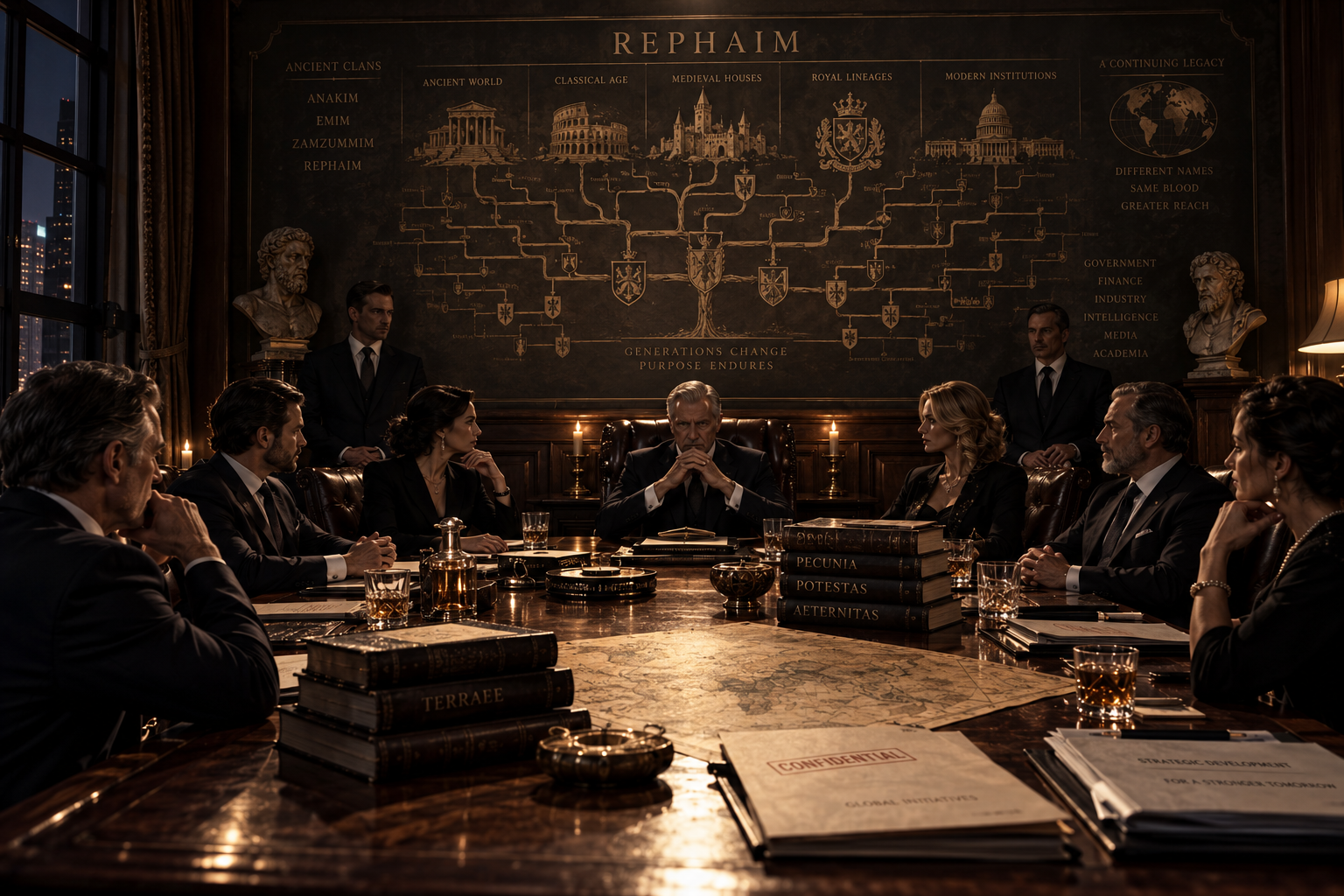
Marriages were planned across generations. Families carrying the strongest remnants of the old inheritance were preserved, while others were joined to houses possessing wealth, land or influence. Sons were prepared for positions of authority. Daughters married into families capable of opening doors conquest never could.
The strategy required patience.
They had learned patience.
Kingdoms became empires. Empires became nations. Merchant houses became banks and corporations. With every transformation, the families adapted—placing descendants among rulers, financiers, military leaders, scholars and eventually the institutions of modern government and industry.
They did not need to control every throne.
They only needed influence over the people who sat upon them.
No single generation was expected to complete what had begun thousands of years earlier. Each inherited a position, strengthened it, and prepared the next to advance farther.
The Nephilim had attempted to seize dominion in a single age.
Their descendants would reclaim it one generation at a time.
And almost no one would know they were there.
DOMINION
Thousands of years had passed.
The purpose had not changed.
The Watchers had once taught their sons that mankind was theirs to rule. The first Nephilim pursued that inheritance openly, raising armies, building kingdoms and demanding worship from those they considered beneath them.
Their descendants pursued the same ambition differently.
The Rephaim no longer needed crowns.
Their families had accumulated wealth, influence and access across generations. They had learned that governments could be influenced without ruling them, wars could be shaped without fighting them, and nations could be redirected by decisions made far from any battlefield.
Their ancestors had built armies.
They built institutions.
Their ancestors conquered cities.
They influenced nations.
Their ancestors demanded mankind kneel before them.
The Rephaim learned it was easier if mankind never realized it had.
They had not abandoned the ambition of their fathers.
They had perfected it.

THE INHERITORS
For centuries, the surviving families guarded their ancestry as closely as they guarded their influence.
Genealogies were preserved.
Marriages were recorded.
Bloodlines were monitored.
And certain artifacts belonging to the world before the Flood were passed from one generation to another.
Not as relics.
As birthrights.
Most of the modern world has forgotten what those objects represent.
The families have not.
Some believe the age of secrecy has served its purpose. That the bloodlines have regained sufficient influence. That mankind has grown divided, dependent and vulnerable enough for something their ancestors began thousands of years ago to finally be completed.
They are no longer searching for somewhere to hide.
They are searching for what was taken from them.
And somewhere within the modern world, an heir carries a fragment of an inheritance older than every nation on earth.
He intends to reclaim the rest.